
What is Bitunix?
Bitunix is a centralized crypto exchange that offers both spot trading and derivative/perpetual futures trading. It also includes features like copy trading, earn/yield options, and some “opportunity/promotion” tools. It’s relatively new (launched around 2021-2022) and is registered in St. Vincent & the Grenadines. One of their selling points is that they often promote a “no KYC” or light KYC experience (up to certain limits) so users can trade without jumping through too many identity hoops.
The idea behind Bitunix seems to be: provide the tools serious traders want (leverage, advanced trading, copy trading) while keeping onboarding friction low. They also tend to push features like “dual investment,” staking, and yield opportunities, so it’s not just about active trading. In many ways, they try to package both trading and passive-income tools into one platform.
My Overall Thoughts on Bitunix
After using Bitunix for a while (doing spot trades, futures, copy trading, checking out promotions), three things stood out to me as the strongest:
1) Low and competitive fees (especially for more active users). The maker / taker fee structure is pretty favorable compared to a lot of newer exchanges, and when you climb the VIP tiers (via volume or balance), the reductions get meaningful.
2) Good mix of features in one place. Not only can you trade spot and futures, but you also get copy trading, dual investment / yield options, and “opportunity” tools that make the platform feel versatile — you’re not forced to use separate services for every function.
3) Relatively easy onboarding / lighter KYC constraints (depending on region). For people who want to get in and trade without extended waits, Bitunix can feel more accessible than exchanges with heavy identity verification from day one.
Putting it together, Bitunix feels like a “solid mid-tier exchange that punches above its weight.” It doesn’t have all the bells and whistles of legacy giants like MEXC or Bybit, but for many traders it offers almost everything you’d want without feeling half-baked.
That said, I wouldn’t call it flawless. It still has some downsides (which I’ll get into later). But if I were advising someone who wants more than just basic crypto swapping but doesn’t want to deal with overly complicated platforms, I’d say Bitunix is a pretty good place to try.
Key Features and Advantages of Bitunix
Bitunix feels like a professional trading platform that doesn’t try too hard to overwhelm you. It strikes a nice balance — clean enough for beginners to get started quickly, but packed with enough tools to keep experienced traders busy. You can trade spot, jump into perpetual futures with leverage, or even copy seasoned traders if you prefer a hands-off approach. Everything’s laid out logically, and the interface feels fast and modern.
One thing that makes Bitunix stand out is its low-fee, high-function setup. The fees are among the most competitive I’ve seen for a newer exchange, especially once you unlock VIP levels. It also supports a wide range of crypto assets and trading pairs, giving you flexibility to diversify or hedge your portfolio without leaving the platform. Security-wise, Bitunix uses industry-standard protections like cold storage and two-factor authentication, so it feels reassuringly solid.
Here’s a quick rundown of what makes Bitunix worth checking out:
- Tiered fee structure with strong discounts
- Wide asset and contract offerings
- Copy trading / social trading options
- Passive / yield / “opportunity” tools
- Conversion / “zero-fee swaps” & fiat gateway support
- iOS and Android mobile apps
- VIP / discount & reward programs
Negatives and Disadvantages of Bitunix
While I’m trying to stay mostly positive, it’s only fair to mention what annoyed me or raised caution flags.
- Regulatory and trust ambiguity
- Less advanced tools in certain areas
What Services Does Bitunix Offer?
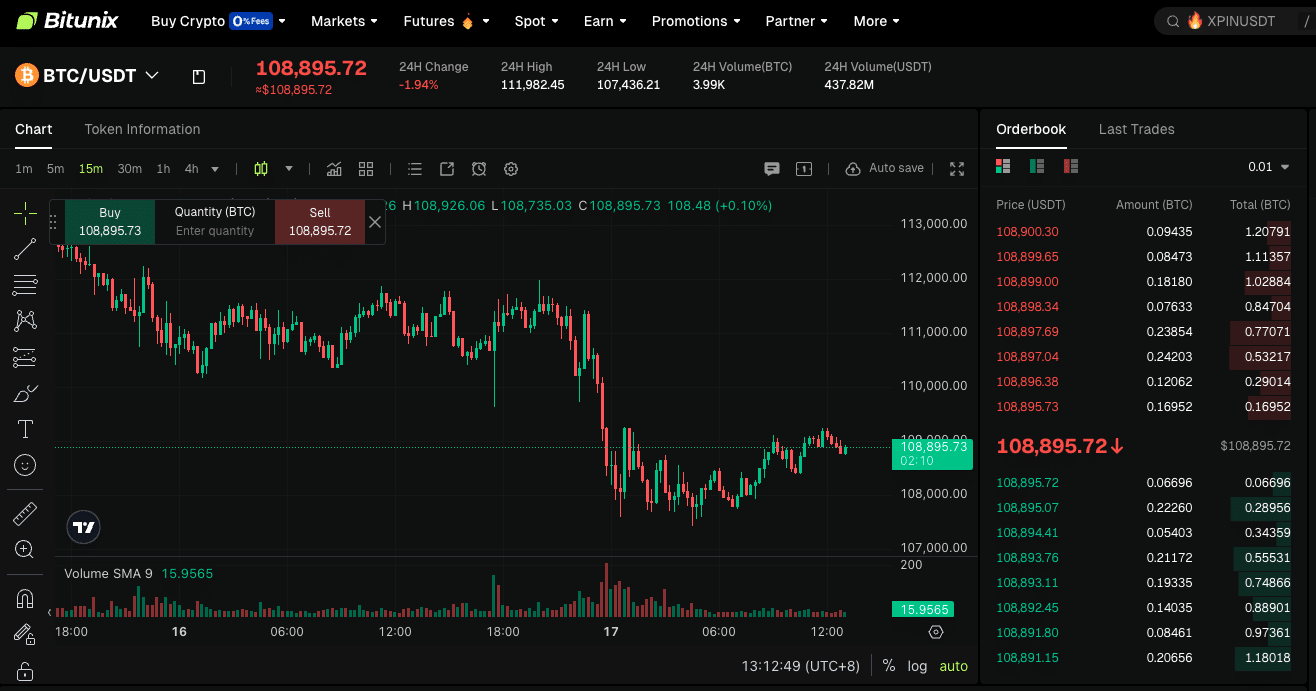
Spot Trading: Spot trading on Bitunix is your straightforward buy/sell of cryptocurrencies at market or limit orders. You deposit crypto, select a pair (e.g. BTC/USDT), pick your order type, and the trade executes when matched. The interface is clean and responsive, with charting tools and basic indicators to guide decisions.What I liked is that major pairs (BTC, ETH, etc.) have good liquidity, so slippage is manageable for normal-sized trades. The “convert” feature (zero or very low fee swaps between supported tokens) is handy for quick shifts without going through full order books. The downside is: for very obscure tokens, depth can sometimes be shallow; and if a token gets delisted or support removed, you could get stuck or have to scramble.
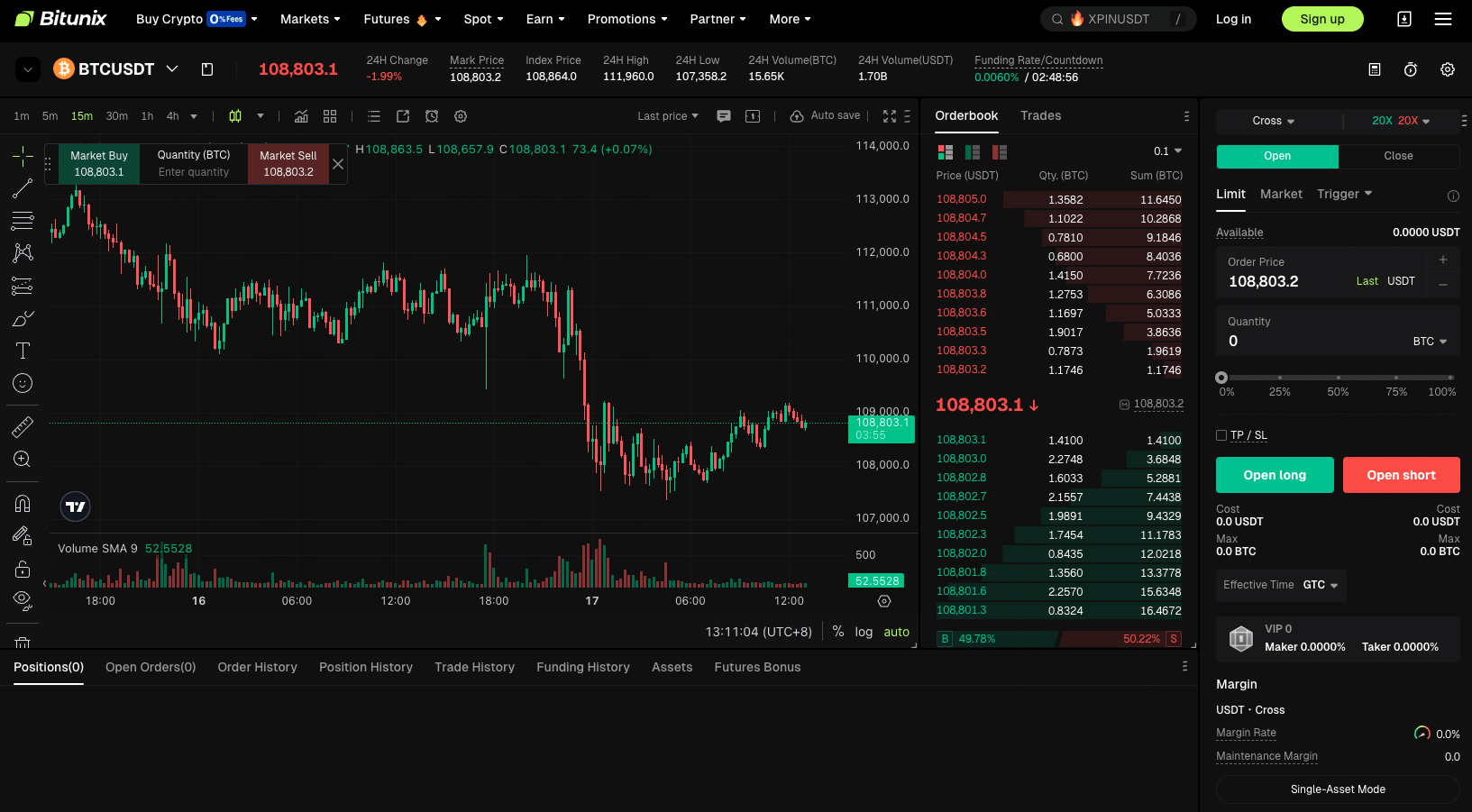
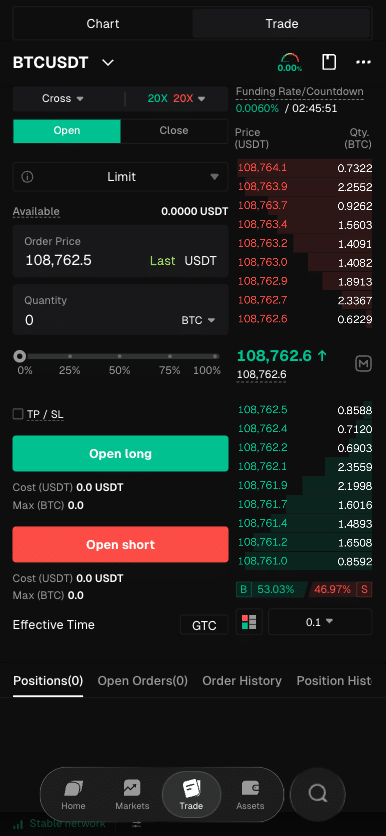
Futures / Perpetual Contracts (Derivatives): On the derivatives side, Bitunix offers futures (perpetual contracts) where you can trade with leverage, long or short, without necessarily owning the underlying asset. You allocate margin (USDT or sometimes coin) and open positions that accrue funding, etc. It supports isolated and cross margin modes, letting you limit risk per position or let it share risk across your futures balance.In use, the engine has been solid: order execution is quick, margin / liquidation details are clear, and you can see funding rates and leverage options. One caveat is that with high leverage, the risk of liquidation escalates fast — you really need to manage stop losses and not overextend. Also, funding rates can swing, so your hold cost matters. For newcomers, this is exciting but also dangerous if misused.
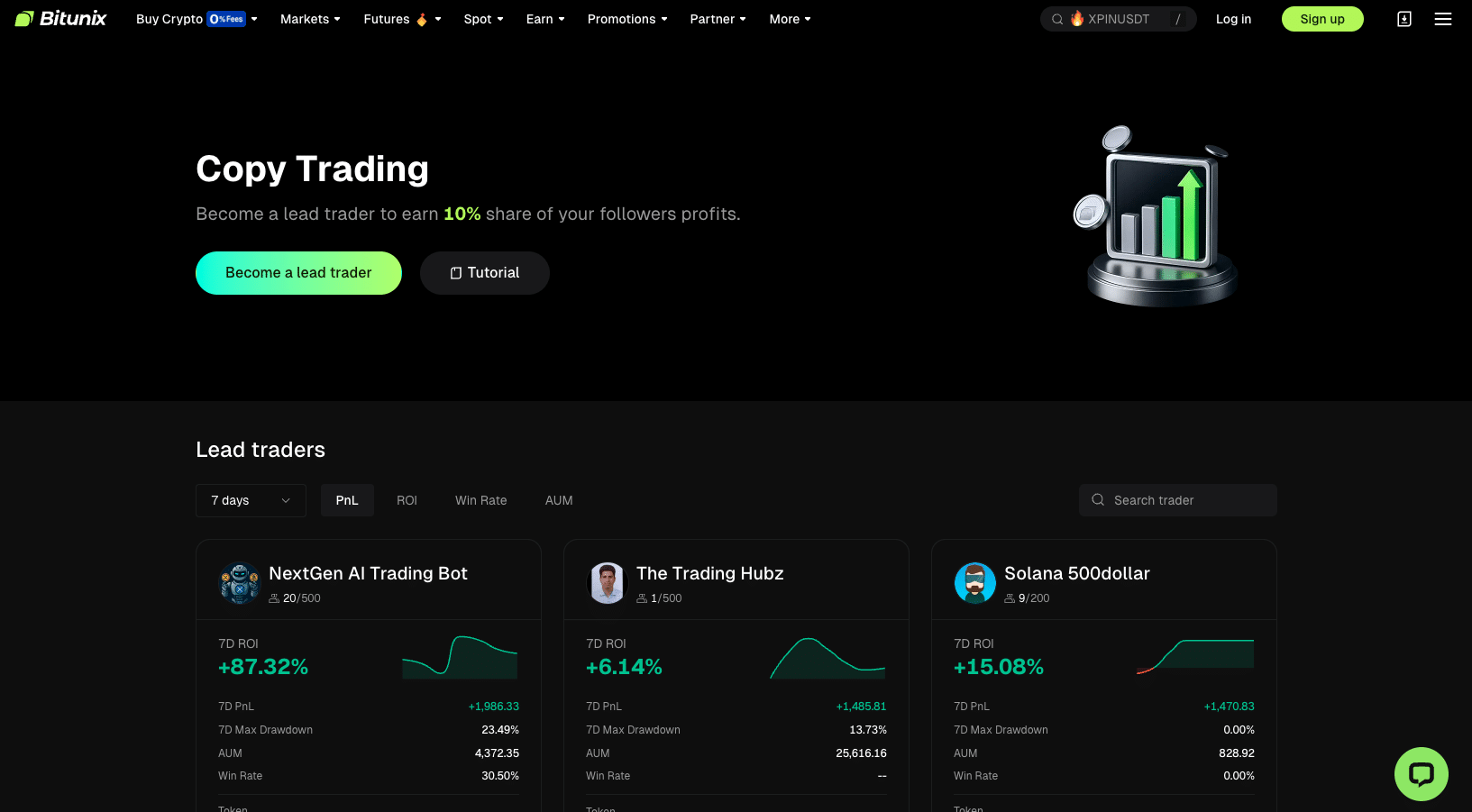
Copy Trading / Social Trading: Copy trading allows you to pick a “master trader” whose strategy you like, and your account mirrors their trades proportionally. Bitunix shows stats (ROI, performance, history, drawdowns) so you can make informed choices. Some even let you choose fixed ratio vs proportional modes.This is great for users who want exposure to futures or complex trading without being glued to screens. But of course, you’re totally dependent on the master’s decisions — if they make a bad call, you feel it. Also, sometimes the timing mismatch or slippage between their trade and your copy can produce disparities.
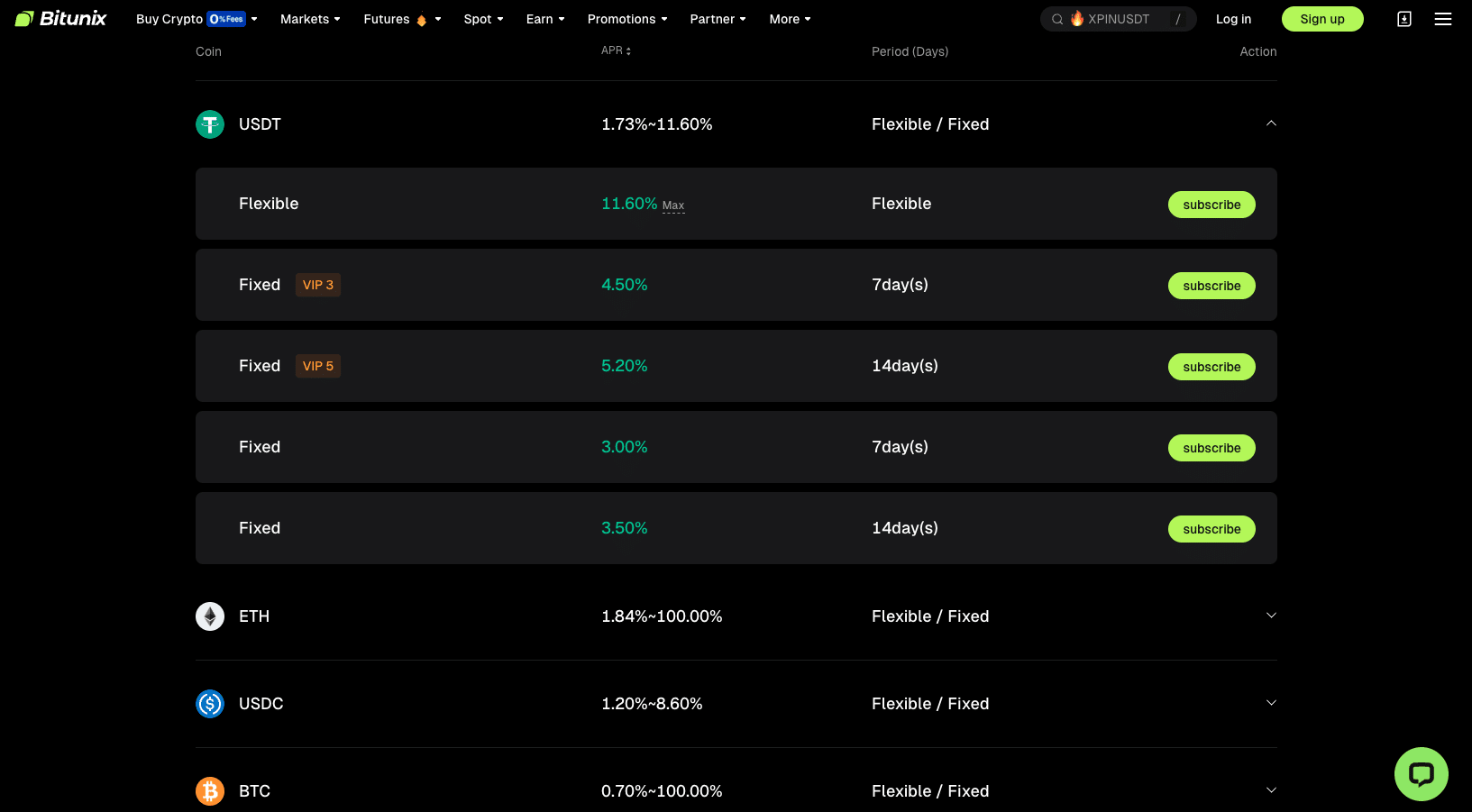
Earn / Yield / Dual Investment / Staking Tools: Bitunix offers ways to put idle crypto to work. You can stake tokens or participate in yield or “dual investment” products (which are like locked or conditional yield instruments). The idea is you get some return while your assets are not actively being traded.I liked that this gives a hybrid use case: you’re not forced to pick between trading or holding. But yields vary, and you should inspect contract terms (lock periods, early withdrawal penalties, etc.). Also, any yield product carries risk from the platform or the underlying asset movement, so it’s not a zero-risk side gig.
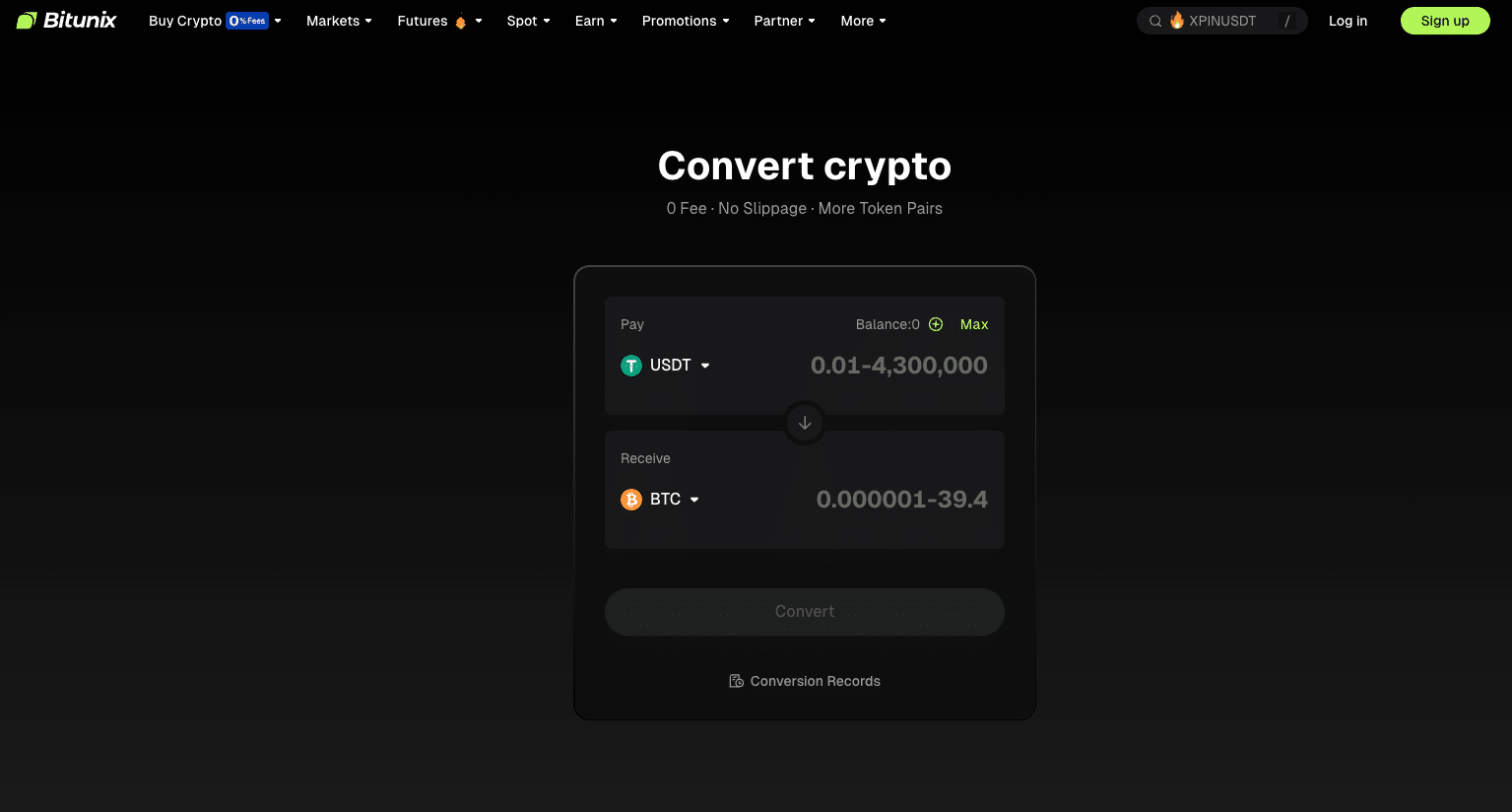
Convert / Token Swaps: They have a “convert” or swap feature, where you can swap one token for another within a supported pair, often with minimal or zero fees. This is perfect for making quick adjustments without going through full order books, particularly for smaller trades.On the plus side, it’s super convenient, especially when you want to reallocate quickly. On the flip side, the supported token pairs might be limited, and for large orders the difference between convert rate and order book price might widen. Also, the “zero fee” version might hide some minor spread or slippage, so always check what you’re actually getting.
Fiat Gateway / Payment Partner Integration: Although Bitunix doesn’t always offer direct fiat deposit/withdrawals everywhere, in many regions they integrate with third-party payment providers (credit/debit card, payment rails) so you can “Buy Crypto” using local currency via those partners. That helps users who don’t already hold crypto get in more easily.The downside is that these gateway methods often carry extra fees, exchange spreads, and possibly KYC from the payment provider side. And in many places, fiat withdrawals are still limited or unsupported, meaning you might need to route through secondary platforms to cash out.


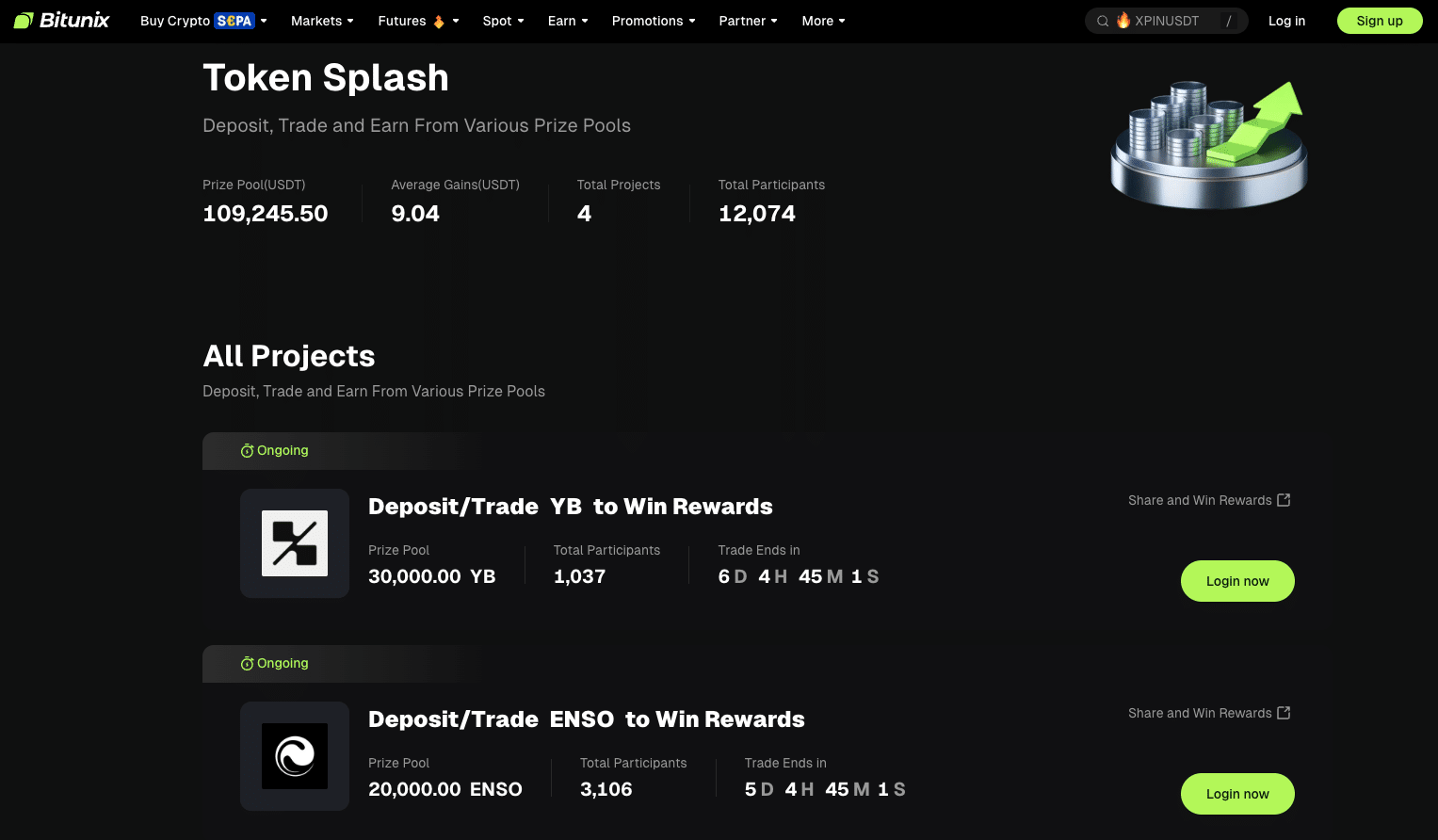
VIP / Reward / Task Centers / Promotions: Bitunix runs a VIP system (tiered levels) where higher volume or balance gives you lower fees. They also have campaign or task centers, referral rebates, seasonal promotions, and rewards that can offset costs or give you extra perks. It’s part of their “hook” to keep active traders engaged.These help make the cost of trading more flexible: you can unlock discounts, bonuses, or rewards through more participation. The catch? These rewards often come with conditions — minimum trades, holding periods, lockup windows — so if you don’t read the fine print, you could get surprised.
What I Don’t Like About Bitunix
Regulatory uncertainty is a real concern: Because Bitunix operates under offshore jurisdiction and leans on lighter KYC, in the event of a dispute or security incident, your recourse is weaker than with a heavily regulated exchange.
Some advanced tools are missing or less mature: For example, built-in trading bots (grid, arbitrage bots) aren’t as fleshed out as on big exchanges. Similarly, for ultra-advanced order types or exotic derivatives, you might find limitations.
Bitunix Fees
Bitunix Deposit Fees
Crypto deposits are free, but if you use payment providers to deposit fiat currencies a charge will be incurred. This will vary depending on the payment platform.
Bitunix Trading Fees
Spot trading: Base fees start at 0.08% (maker) / 0.10% (taker). As you climb VIP tiers, the fees decrease (with the highest level of VIP only paying 0.01% for makers and 0.0325% for takers).Futures trading: Base maker/taker are 0.02% / 0.06%. With VIP discounts, those can drop further (with the highest level of VIP only paying 0.006% for makers and 0.03% for takers).
Bitunix Crypto Withdrawal Fee
Withdrawals depend on the token and network (BTC, USDT, etc.)
Pros and Cons of Bitunix
Pros
- Good fee structure with real discounts via VIP tiers
- Wide combo of features — spot, futures, copy, yield, convert
- Easier onboarding / lighter KYC
- Flexible and convenient “convert” swaps
- Reward / campaign programs add value
Cons
- Regulatory safety layer is weaker than fully licensed exchanges
- Some advanced trader tools (bots, exotic derivatives) are limited
The Verdict
If someone asked me: “Should I try Bitunix?”, I’d say yes. It’s not perfect, but it gives a lot of value, especially for medium-to-advanced crypto users who want more control and flexibility than basic exchanges. For someone who already has some crypto and wants to trade or experiment, Bitunix is worth putting a small amount in, testing withdrawals, and seeing how comfortable you feel.
For long-term or large-capital holdings, I’d still suggest using multiple platforms and not relying wholly on any one, especially newer ones. But as a trading hub, Bitunix is a solid candidate.
If you are in the US, unfortunately Bitunix is not available as it is listed as a restricted region on their website. If you are looking for a crypto exchange to use in the US, see my quick comparison table below, or read my article on the best crypto exchanges to find the best choice for your needs.
Comparison Table of the Best Crypto Exchanges in the USA
 |
 |
 |
 |
 |
|
|---|---|---|---|---|---|
| Fiat Currencies | USD, EUR, CNY, CAD, GBP, CHF, AUD | USD | USD, GBP, EUR, CHF, AUD, JPY & 21 more | USD, EUR, AUD, CAD, GBP, JPY | USD, EUR, GBP, JPY, CAD, CHF, AUD |
| Cryptocurrencies | BTC, ETH, USDT, LTC, TRX, BCH, ETC, DOGE & 600+ more | BTC, ETH, BCH, DASH, LTC, ETC & 110 more | BTC, ETH, ADA, DOGE, COMP, DOT & 125+ more | BTC, ETH, ETC, UNI, LINK, LTC, BCH, DOGE, MATIC, EOS, AAVE, COMP, OMG, YFI, WBTC | BTC, ETH, XRP, BCH, EOS, LTC, ADA & 200+ more |
| Deposit Methods | Bank Cards, Alipay, Alchemy Pay, ChipPay, Cryptocurrency, and more | PayPal, Debit card, Wire transfer | Bank Transfer (ACH), Bank Transfer (SEPA), Debit/Credit Card, Wire Transfer, Faster Payments Service, SWIFT, Cryptocurrency | Credit card, Debit card, Fedwire, Apple Pay, Google Pay | Bank transfer (ACH), Fedwire, SWIFT, Wire transfer, Apple Pay, Google Pay, SEPA, Debit/Credit card, Cryptocurrency |
| Trading Fees | 0.1% for spot, 0.02%/0.08% for futures | 1% | Fees included in the spread | 2.93% – 3.90% (depending on loyalty level) | 0.16%/0.26% (maker/taker) |
| Sign UpRead Review | Sign UpRead Review | Sign UpRead Review | Sign UpRead Review | Sign UpRead Review |
Cryptocurrency is offered by eToro USA LLC (“the MSB”) (NMLS: 1769299) and is not FDIC or SIPC insured. Investing involves risk.
Frequently Asked Questions
Is Bitunix safe and regulated?
Bitunix operates under multiple international jurisdictions and follows standard KYC/AML requirements. Security includes cold storage of customer funds, two-factor authentication, anti-phishing codes, and withdrawal whitelisting. Always check Bitunix’s current registration status in your country before depositing funds.
What are Bitunix’s fees?
Bitunix’s trading fees vary by tier and product (spot vs. futures). Crypto deposits are typically free; crypto withdrawals incur the standard per-coin network fee. Check the Bitunix fees page for the most up-to-date breakdown of fees by region and product.
How many cryptocurrencies can I trade on Bitunix?
Bitunix supports a wide range of cryptocurrencies including all the major coins (Bitcoin, Ethereum, USDT, etc.) plus many altcoins. New listings are added regularly — check the live coin list on the Bitunix site for the current selection.
Is Bitunix available in my country?
Bitunix’s availability varies by region. Always confirm via Bitunix’s site whether the platform is available in your country and what KYC requirements apply. US, UK, EU, Australia and Asia-Pacific availability changes regularly with regulatory shifts.
Does Bitunix have customer support?
Bitunix offers customer support — channels typically include email, ticket-based help and (in many cases) live chat. Response times vary; check current user feedback for the latest support quality assessment.
Marketplacefairness.org provides all its content for informational purposes only, and this should not be taken as financial advice to buy, trade or sell cryptocurrency or use any specific exchange. Please do not use this website as investment advice, financial advice or legal advice, and each individual’s needs may vary from that of the author. This post includes affiliate links with our partners who may compensate us.
To view our privacy policy read this page.