
If you’re looking to get into crypto, chances are you’ve already come across Crypto.com and Coinbase—they’re two of the most well-known cryptocurrency exchanges out there, especially in the U.S.
I’ve used both, and after spending a fair bit of time with each, I’ve got to say: Crypto.com came out ahead for me. The fees are lower, I can actually chat with someone through Live Chat (big plus), and staking their native coin CRO unlocks some surprisingly good perks—think up to 5% cashback and free airport lounge access.
But hey, everyone’s needs are different, so here’s a breakdown to help you figure out which one suits you best.
| Cell |  |
 |
|
Fiat Currencies |
USD, AUD, CAD, CHF, EUR, GBP, NZD, SGD, JPY & 10+ more |
AUD, USD, EUR, GBP, CAD, MXN, HRK, CZK & 10+ more |
|
Number of Coins |
250+ |
160+ |
|
Buy/Sell Fees |
Exchange: from 0.4%, App: Free |
|
|
Deposit Methods |
Cell | Cell |
|
Bank Transfer (SEPA) |
||
|
Bank Transfer (ACH) |
||
|
Fedwire |
||
|
PayPal |
||
|
Credit Card |
||
|
Debit Card |
||
|
Apple Pay |
||
|
SWIFT |
||
|
Skrill |
||
|
SOFORT/iDEAL |
||
|
Cryptocurrency |
||
|
Features |
Cell | Cell |
|
User-friendly |
||
|
Mobile app |
||
|
Live Chat |
||
|
Security |
Cell | Cell |
|
2FA |
||
|
Biometric security |
||
|
ISO/IEC 27701:2019 certified |
||
|
Offline cold storage |
||
|
Website |
| Cell | |
|
|
Fiat Currencies |
USD, AUD, CAD, CHF, EUR, GBP, NZD, SGD, JPY & 10+ more |
AUD, USD, EUR, GBP, CAD, MXN, HRK, CZK & 10+ more |
|
Number of Coins |
250+ |
160+ |
|
Buy/Sell Fees |
Exchange: from 0.4%, App: Free |
|
|
Deposit Methods |
Cell | Cell |
|
Bank Transfer (SEPA) |
||
|
Bank Transfer (ACH) |
||
|
Fedwire |
||
|
PayPal |
||
|
Credit Card |
||
|
Debit Card |
||
|
Apple Pay |
||
|
SWIFT |
||
|
Skrill |
||
|
SOFORT/iDEAL |
||
|
Cryptocurrency |
||
|
Features |
Cell | Cell |
|
User-friendly |
||
|
Mobile app |
||
|
Live Chat |
||
|
Security |
Cell | Cell |
|
2FA |
||
|
Biometric security |
||
|
ISO/IEC 27701:2019 certified |
||
|
Offline cold storage |
||
|
Website |
Pros
- Over 250+ cryptocurrencies supported with staking available on 40+ coins
- Crypto.com Visa debit card with up to 5% cashback on purchases and additional benefits, such as Airport Lounge access
- Lend and borrow cryptocurrency easily
- Insurance cover on cryptocurrencies
- Margin trading and derivatives trading available on desktop exchange
Cons
- Desktop website is limited to trading with only USDT, USDC, BTC & CRO
- Crypto.com Visa card may require currency conversion fees
Pros
- Coinbase privately insures their own platform so your funds are safe in the event there is a hack
- Simple and user-friendly interface
- Only takes a few minutes to register and start trading
- Over 160+ cryptocurrencies available
- Extremely secure and trusted platform
Cons
- Complicated fee structure that is higher than competitors
- Doesn’t offer as many coins as Crypto.com
- No Live Chat support
Crypto.com vs Coinbase Fees
Let’s be real—fees matter. Here’s how the two stack up:
Deposit Fees
Crypto.com: Zero fees when depositing fiat or crypto.Coinbase:
- ACH transfer (U.S.) – Free
- Wire transfer – $10 fee
Trading Fees
Crypto.com splits its fees between two platforms: the Exchange (desktop) and the mobile app.
- Crypto.com Exchange: Starts at 0.4%, but if you trade a lot or stake CRO, that number drops.
- Crypto.com App:
- No fee when buying crypto with fiat you’ve already deposited.
- Swapping crypto is free (technically), but there’s a spread fee built into the price.
- Buying with credit/debit card? Up to 4%, but they waive this for the first 30 days.
Coinbase is a bit more complicated:You get hit with a 0.5% spread fee plus a ‘Coinbase fee’, which is either a flat rate or a percentage—whichever is higher, as shown below. That fee structure alone makes Crypto.com a more transparent and cost-effective choice.
Flat fee
|
Transaction value |
Fee |
|---|---|
|
$10 or less |
$0.99 |
|
$10 to $25 |
$1.49 |
|
$25 to $50 |
$1.99 |
|
$50 to $200 |
$2.99 |
Variable fee
|
Payment Method/Payout Method |
Effective Rate of Conversion Fee |
|---|---|
|
US Bank Account |
1.49% |
|
Coinbase USD Wallet |
1.49% |
|
Debit Card or PayPal |
3.99% |
|
Instant Card Withdrawal |
up to 1.5% (minimum $0.55) |
Withdrawal Fees
Crypto.com:
- Fiat withdrawals are free via bank transfer.
- Want to withdraw USDC via SWIFT? That’s $25.
Coinbase:
- SEPA bank transfer – €0.15
- U.S. wire transfer – $25
Winner –Crypto.com
Crypto.com is the winner when it comes to comparing fees. You can purchase crypto for 0.4% on the desktop site, or free of charge on the app. Using Coinbase, the fees are not easy to understand, and the fee you can be charged ranges from 2.49% – 4.49%.
Crypto.com vs Coinbase Deposit Methods
Both platforms support a wide range of deposit options: ACH, SEPA, credit/debit card, PayPal, crypto deposits—you name it.
Coinbase also adds in Apple Pay and SOFORT/iDEAL if that’s more your speed.
Winner – Coinbase
Both of these crypto platforms have a healthy number of payment options, but Coinbase accepts a few more that aren’t available on Crypto.com.
Crypto.com vs Coinbase Features
Both Crypto.com and Coinbase come loaded with features, but they offer pretty different experiences, especially once you get beyond just buying and selling crypto.
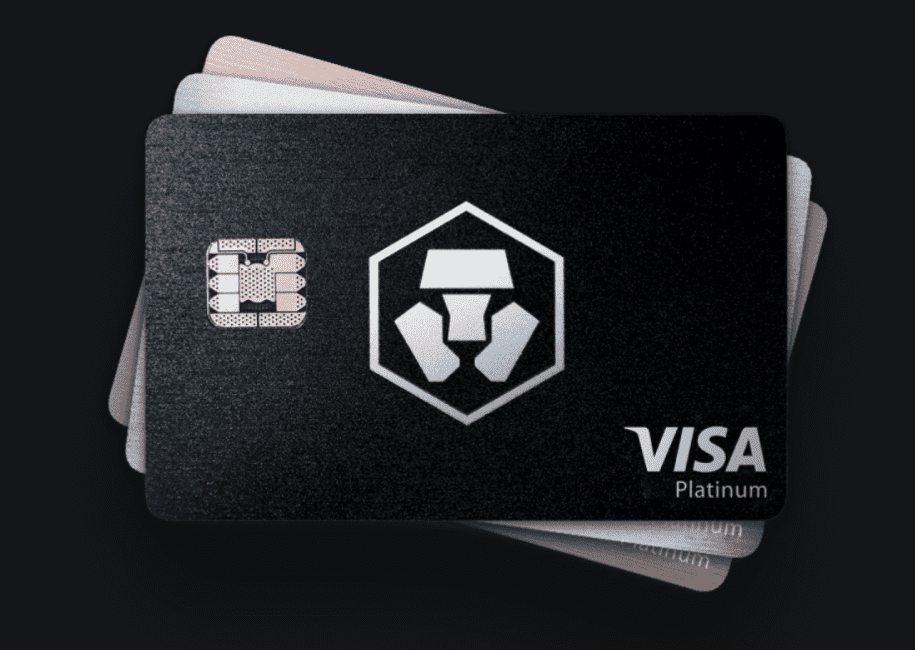
Crypto.com really shines when it comes to extras. One of the standout features is their native token, CRO. If you stake CRO—meaning you lock it up for a certain period—you unlock a whole range of benefits, especially on their mobile app. Personally, I found the staking rewards to be one of the biggest draws. You can earn up to 12% APR on your CRO, and the more you stake, the better your benefits. That includes things like boosted interest rates on other crypto holdings, discounted trading fees, and access to their metal Visa card, which honestly feels more like a premium rewards card than a crypto tool. Depending on how much CRO you stake, you can get up to 5% cashback on purchases, 100% rebates on subscriptions like Netflix and Spotify, discounts on bookings through Expedia and Airbnb, and even access to airport lounges. The card itself doesn’t require you to spend crypto either—you just load it with fiat and use it like any regular debit card.
Coinbase, on the other hand, leans more into the educational and accessibility side of crypto. One feature I really liked is their “Learn & Earn” program. It’s a simple concept—you watch short, beginner-friendly videos about different cryptocurrencies, and then they give you a small amount of that coin for free. It’s not going to make you rich, but it’s a nice way to dip your toes into new projects.

Coinbase also has its own mobile Wallet app (separate from your main account) that lets you explore decentralized apps (DApps), hold NFTs, participate in ICOs, and interact more directly with the decentralized world. It feels a bit more like a gateway to Web3, while Crypto.com stays more focused on integrating crypto into your day-to-day spending and saving habits.
Winner –Crypto.com
Crypto.com stands out in terms of features, with the main focus being the CRO coin. When users stake the CRO coin, they gain access to many advantages, including the Visa debit card, which in turn provides additional benefits.
Crypto.com vs Coinbase Security
When it comes to security, both Crypto.com and Coinbase are about as serious as it gets—but they go about it in slightly different ways.
Crypto.com stores 100% of users’ crypto assets offline in cold storage using Ledger Vault, which is a top-tier institutional-grade system. Fiat currencies—like USD or EUR—are kept in regulated bank accounts, and for U.S. users, they even come with FDIC insurance up to the standard limits. On top of that, Crypto.com has picked up some pretty heavyweight certifications, including the ISO/IEC 27701:2019 privacy standard. That basically means they’ve gone through rigorous third-party audits and meet strict privacy and data protection standards. They were actually the first crypto company to receive that certification, which is pretty impressive. Plus, they have insurance coverage in place to protect customer assets in the unlikely event of a security breach.
Coinbase also takes a very thorough approach to security. They store about 98% of all digital assets offline in cold storage, using a mix of geographically distributed USB drives and paper backups locked in secure vaults around the world. Their platform is protected with two-factor authentication (2FA), biometric logins like fingerprint or face ID, and strong encryption for all user data. Coinbase also screens all employees with background checks and makes sure their hard drives are encrypted—so they’ve clearly put some thought into internal risks as well. One extra thing I thought was interesting is that they also carry crime insurance in case something goes wrong and assets are lost due to a hack or other security incident.
All in all, both platforms are highly secure, and I’ve personally never run into any trust issues or red flags while using either of them. If security is a big concern for you (and honestly, it should be), both Crypto.com and Coinbase are among the safest exchanges out there right now.
Winner –Crypto.com
Crypto.com and Coinbase are both safe crypto exchanges, but Crypto.com has gone above and beyond. It has ISO/IEC 27701:2019 certification, cold storage of 100% of users’ digital assets, and insurance cover.
The Winner – Crypto.com
When I first started comparing Crypto.com and Coinbase, I honestly thought it would be a close call—especially since Coinbase is so well-known and widely used. But once I dug into the details and actually spent time using both platforms, Crypto.com came out as the clear winner for me.
The lower fees are a huge plus, especially when you’re making frequent trades or just starting out and don’t want your profits eaten up by charges. On top of that, Crypto.com gives you real, tangible benefits if you stake CRO. We’re talking about a proper rewards ecosystem—cashback on purchases, rebates on Netflix and Spotify, free airport lounge access, and even higher interest rates on your staked crypto. It feels more like a lifestyle card than just a crypto exchange.
Coinbase definitely has its strengths—especially when it comes to being user-friendly and educational. It’s great for beginners, and the “Learn & Earn” feature is genuinely useful if you want to explore crypto in a low-risk way. But for me, Crypto.com just offers more value if you’re planning to be in the crypto space long term. Between the Visa card perks, the staking rewards, and the range of supported coins, it feels like I’m getting more out of every dollar (or CRO) I put in.
Overall Winner –Crypto.com
Lower fees, more cryptocurrencies, Live Chat support, higher security and staking of over 40+ coins including CRO makes Crypto.com the favourite in this comparison.

Still Researching?
If you’re still weighing your options or just want to do a bit more digging before deciding where to sign up, I totally get it. These platforms both offer a lot, and it really depends on what you’re looking for—whether it’s low fees, solid staking returns, advanced features, or just an easy way to get started.
To help you out, I’ve written full, detailed reviews of both platforms where I break down the pros, cons, and everything in between. You can check out my Crypto.com review (here) and my Coinbase review (here) if you want the full picture.
And if you’re based in the U.S. and still exploring other options, I’ve also put together a list of the best U.S. cryptocurrency exchanges—that way, you can see how these two compare with other popular platforms.
Whatever you decide, just make sure the platform fits your goals. Whether you’re here to trade casually, earn rewards, or go deep into DeFi and staking, there’s a setup out there that’ll work for you.
Comparison Table of the Best Crypto Exchanges in the USA




 Crypto ExchangeCrypto ExchangeMEXCeToroUpholdCoinmamaKrakenFiat CurrenciesFiat CurrenciesUSD, EUR, CNY, CAD, GBP, CHF, AUDUSDUSD, GBP, EUR, CHF, AUD, JPY & 21 moreUSD, EUR, AUD, CAD, GBP, JPYUSD, EUR, GBP, JPY, CAD, CHF, AUDCryptocurrenciesCryptocurrenciesBTC, ETH, USDT, LTC, TRX, BCH, ETC, DOGE & 600+ moreBTC, ETH, BCH, DASH, LTC, ETC & 110 moreBTC, ETH, ADA, DOGE, COMP, DOT & 125+ moreBTC, ETH, ETC, UNI, LINK, LTC, BCH, DOGE, MATIC, EOS, AAVE, COMP, OMG, YFI, WBTCBTC, ETH, XRP, BCH, EOS, LTC, ADA & 200+ moreDeposit MethodsDeposit MethodsBank Cards, Alipay, Alchemy Pay, ChipPay, Cryptocurrency, and morePayPal, Debit card, Wire transferBank Transfer (ACH), Bank Transfer (SEPA), Debit/Credit Card, Wire Transfer, Faster Payments Service, SWIFT, CryptocurrencyCredit card, Debit card, Fedwire, Apple Pay, Google PayBank transfer (ACH), Fedwire, SWIFT, Wire transfer, Apple Pay, Google Pay, SEPA, Debit/Credit card (not for US residents), Bank transfer/OSKO, FPS/BACS, CHAPS, SIC, CryptocurrencyTrading FeesTrading Fees0.1% for spot, 0.02%/0.08% for futures1%Fees included in the spread2.93% – 3.90% (depending on loyalty level)0.16%/0.26% (maker/taker)Sign UpRead Review Sign UpRead Review Sign UpRead Review Sign UpRead Review Sign UpRead Review
Cryptocurrency is offered by eToro USA LLC (“the MSB”) (NMLS: 1769299) and is not FDIC or SIPC insured. Investing involves risk.
Related reading: Crypto.com review, Coinbase review, Coinbase vs KuCoin, Best US crypto exchanges
Marketplacefairness.org provides all its content for informational purposes only, and this should not be taken as financial advice to buy, trade or sell cryptocurrency or use any specific exchange. Please do not use this website as investment advice, financial advice or legal advice, and each individual’s needs may vary from that of the author. This post includes affiliate links with our partners who may compensate us.
To view our privacy policy read this breakdown.